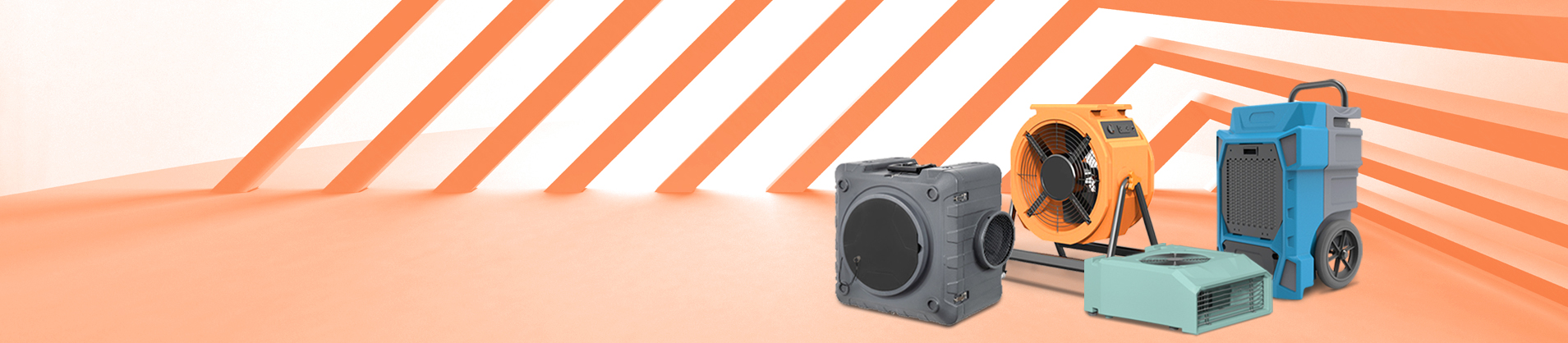
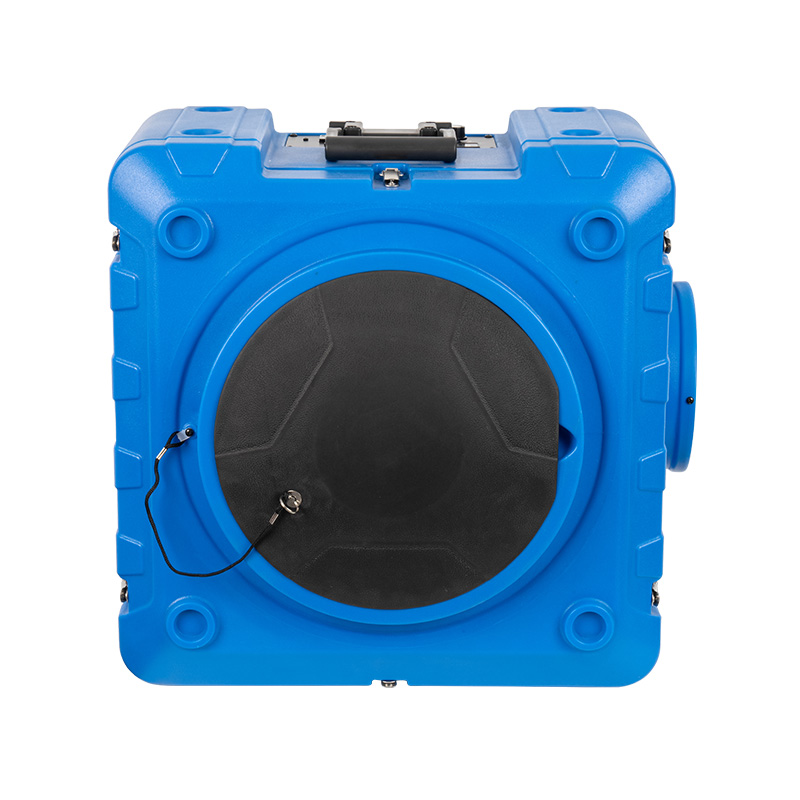
Axial blowers move air in a straight line parallel to the motor shaft, producing high volume at low pressure, while radial blowers pull air in and discharge it at a 90-degree angle, producing lower volume but much higher static pressure. In practical terms: an axial air mover blower typically delivers 2,000 to 3,500 CFM across a wide, open pattern, while a radial (centrifugal) air mover blower delivers roughly 1,000 to 1,300 CFM but pushes that air with far more force into a concentrated area.
Choose an axial blower for open floors, basements, and large rooms where covering square footage matters most. Choose a radial blower for baseboards, wall cavities, carpet edges, and any space where air needs to be forced into a tight gap. The rest of this guide breaks down the engineering behind that difference and how to apply it when selecting an air mover blower for a specific job.
The core distinction between these two blower categories comes down to the path air travels through the housing, not just the shape of the unit.
An axial blower moves air in a direction that is largely parallel to the motor shaft, meaning the airflow enters and exits along the same axis as the rotating blades. As the blades spin, they create a pressure difference between the inlet and outlet sides that pushes air forward in a relatively straight path. This straight-through design is what allows axial units to move large volumes of air with a simple, space-saving structure.
A radial blower, also called a centrifugal blower, works on a completely different principle. Air is drawn into the center of the impeller and then discharged at a 90-degree angle to the intake. This redirection increases the velocity of the air as it passes through the housing, which is why radial units generate more pressure per cubic foot of air moved than axial units do.
Volume and pressure trade off against each other in blower design, and understanding that trade-off is the single most useful thing to know before buying an air mover blower.
Axial fans move air in high volume but at low pressure, distributing airflow somewhat evenly across a defined area. Radial fans generate high-pressure air instead, creating a steady, concentrated stream that can be aimed at a specific spot. The table below summarizes typical performance ranges seen in air mover blowers used for drying, cooling, and ventilation work.
| Characteristic | Axial Blower | Radial (Centrifugal) Blower |
|---|---|---|
| Typical CFM range | 2,000 – 3,500 CFM | 1,000 – 1,300 CFM |
| Static pressure | Low | High |
| Airflow pattern | Broad, wide coverage | Narrow, targeted |
| Best physical footprint | Larger, heavier | Compact, stackable |
| Noise level | Generally louder | Generally quieter |
In real-world testing, one open-basement comparison found that matching a single 3,000 CFM axial unit's output with centrifugal units would require roughly twice as many radial blowers, since each one is optimized for directional force rather than raw volume.
The physical design of each blower type makes it naturally suited to specific spaces and tasks.
Axial air movers are particularly effective when it comes to drying walls, ceilings, and broad, open spaces like basements or attics, since their high-velocity, straight-line airflow covers large square footage efficiently. They're also standard equipment for general cooling and ventilation tasks such as HVAC operations, AC condensers, and spot cooling in industrial systems.
Centrifugal air movers are ideal for focused, high-intensity drying tasks, directing airflow to specific areas such as floors, baseboards, and carpets. Their compact housing lets them fit into tight spaces while still delivering powerful, concentrated airflow exactly where it's needed — a floor vent, a wall cavity, or the edge of a carpet.
Getting the CFM and unit count right matters more than picking the "stronger" blower, since an undersized fleet slows drying time and an oversized one wastes energy and rental cost.
Industry placement guidance (IICRC S500) recommends one air mover per 50 to 70 square feet of wet flooring for Class 2 and Class 3 water damage. That means a 500 square foot flooded room typically needs 7 to 10 units running simultaneously to dry effectively. For residential jobs, air mover CFM ratings of 1,000 to 2,000 CFM generally provide strong performance, while commercial projects tend to call for 2,000 to 3,000 CFM units or a larger fleet of standard units working together.
Pairing is just as important as sizing: each air mover should typically be matched with one dehumidifier per 100 to 150 square feet, since the blower's job is to accelerate evaporation while the dehumidifier removes the resulting moisture from the air.
Pricing between the two blower types is closer than the performance gap might suggest, which is why many contractors keep both on hand rather than standardizing on one.
| Model Type | CFM Rating | Approx. Price |
|---|---|---|
| Axial (open-area benchmark) | 3,000 CFM | $449 |
| Axial (weather-resistant) | 3,000 CFM | $521 |
| Axial (entry-level) | 2,000–3,500 CFM | $310 |
| Radial (standard) | 1,300 CFM | $271 |
| Radial (low-profile) | 1,300 CFM | $443 |
A practical starter fleet for a contractor handling mixed residential and light commercial jobs might combine four axial units for open-area bulk drying with two radial units for precision work along baseboards and tight corners — giving coverage for both scenarios without overspending on either category.
Beyond raw airflow numbers, the physical differences between the two designs affect how easy a blower is to work with on-site.
Radial air movers are typically half the size of standard axial units, which makes them easier to stack, transport, and squeeze into crawl spaces or narrow hallways. Many models are also daisy-chain capable, letting several units share a single power circuit — a practical advantage on job sites with limited outlets.
Axial units tend to be heavier and louder due to their larger blade assembly and higher-volume output, while centrifugal units run quieter thanks to their more controlled, directed airflow pattern. On jobs in occupied homes or offices, this noise difference can influence which unit gets deployed, even when CFM needs would otherwise favor the axial option.
A few recurring errors account for most of the inefficiency seen in blower selection on job sites.
Filtrare în trei etape: scruberul de aer dispune de un sistem de filtrare în trei etape care include un prefiltru (MERV-10), un filtru de carbon și un filtru H13 HEPA. Îndepărtează eficient praful,...
Vezi Detalii
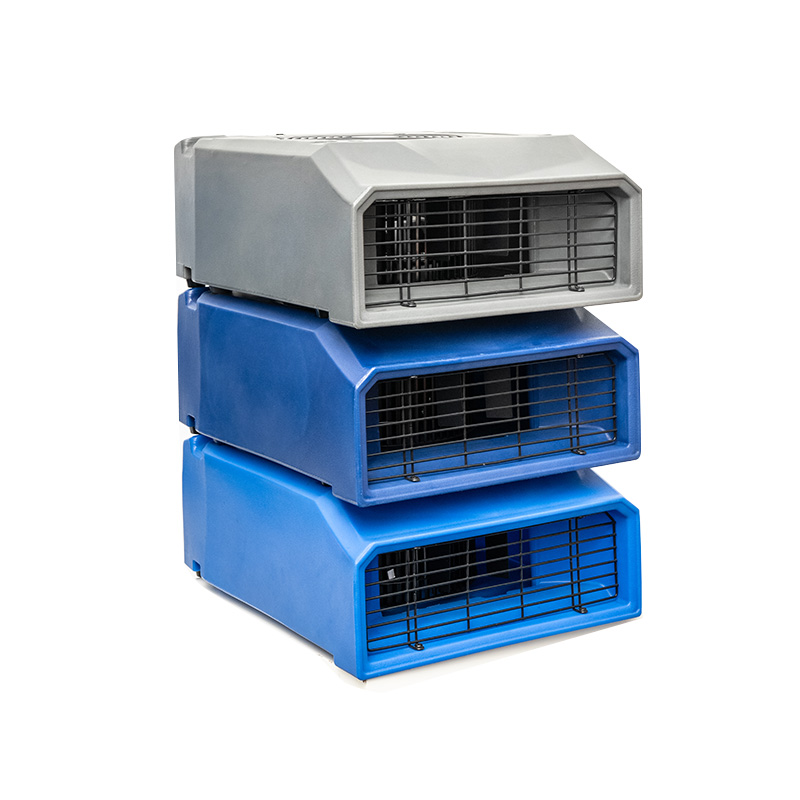
Uscătoarele de covoare subțiri cu volum mare de aer AM-B01 sunt echipate cu un motor puternic care generează un volum mare de flux de aer pentru a se asigura că covorul dumneavoastră se usucă compl...
Vezi Detalii
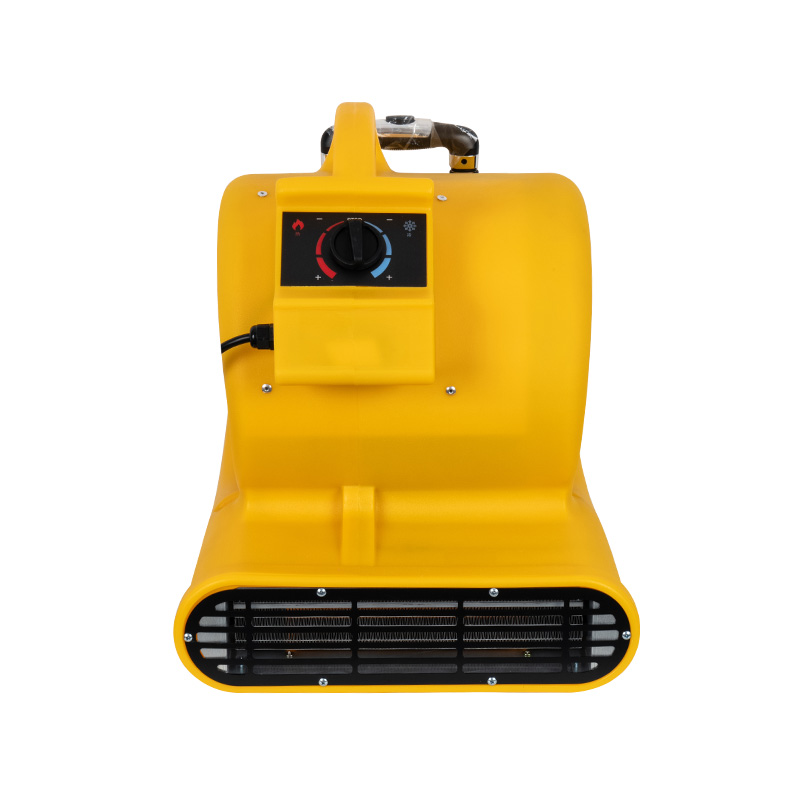
Ventilatoarele de uscare a covoarelor la cald și la rece AM-A01 sunt unități versatile concepute pentru a accelera procesul de uscare a covorului prin utilizarea aerului cald și rece. Combinând ben...
Vezi Detalii
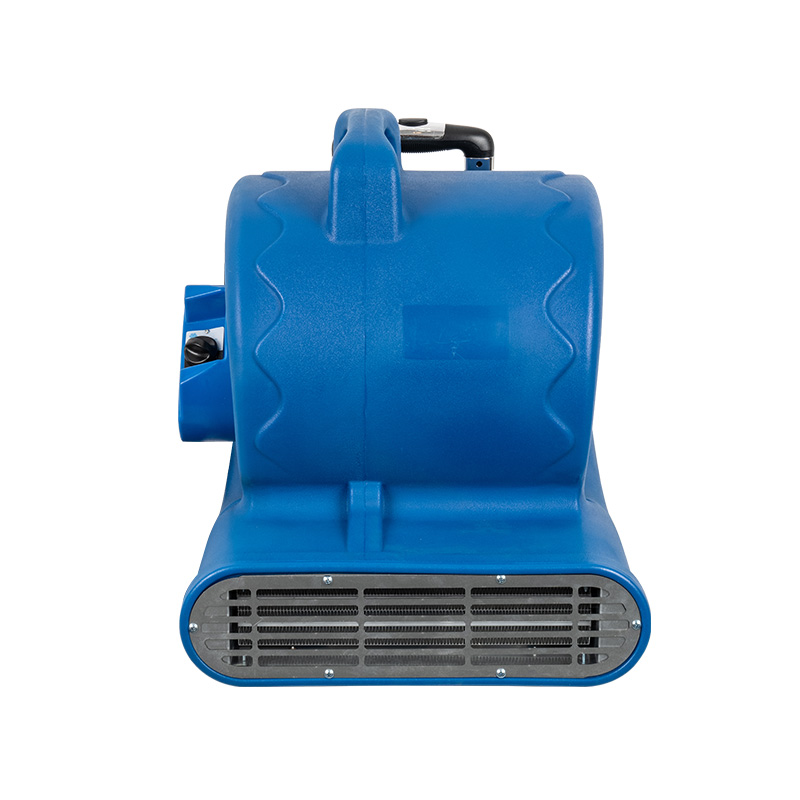
Uscătoarele de covoare centrifugale cu aripi multiple AM-A02 cresc eficient puterea eoliană și fluxul de aer pentru o uscare mai rapidă și mai eficientă a covoarelor prin utilizarea tehnologiei roț...
Vezi Detalii
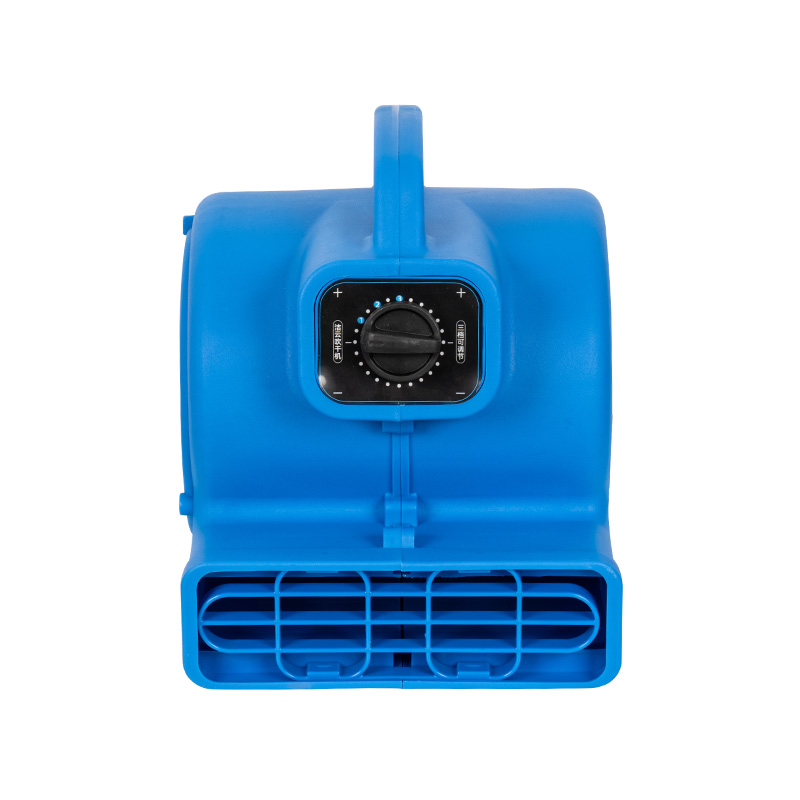
Uscătorul de covoare axial mic pentru podea AM-A03 este o unitate de uscare extrem de eficientă și versatilă, cu un motor centrifugal de aer pentru o uscare mai rapidă a suprafeței. Nu numai că est...
Vezi Detalii
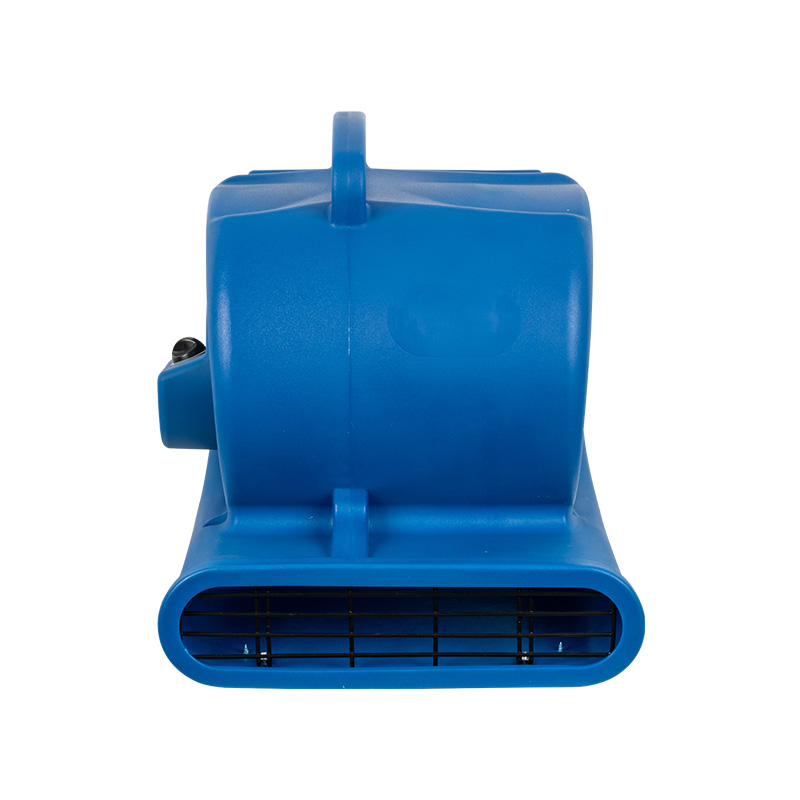
Uscătorul portabil ușor de pardoseală pentru covoare AM-A04 dispune de tehnologie avansată de circulație a aerului centrifugal pentru rezultate mai rapide de uscare a suprafeței. Nu numai că este p...
Vezi DetaliiInformații magazin
Nr. 88, Yuexin Road, strada Sanjiang, orașul Shengzhou, orașul Shaoxing, provincia Zhejiang, China
+86-13819532379
Legături
Produse
Terminal mobil